 ProEnzyme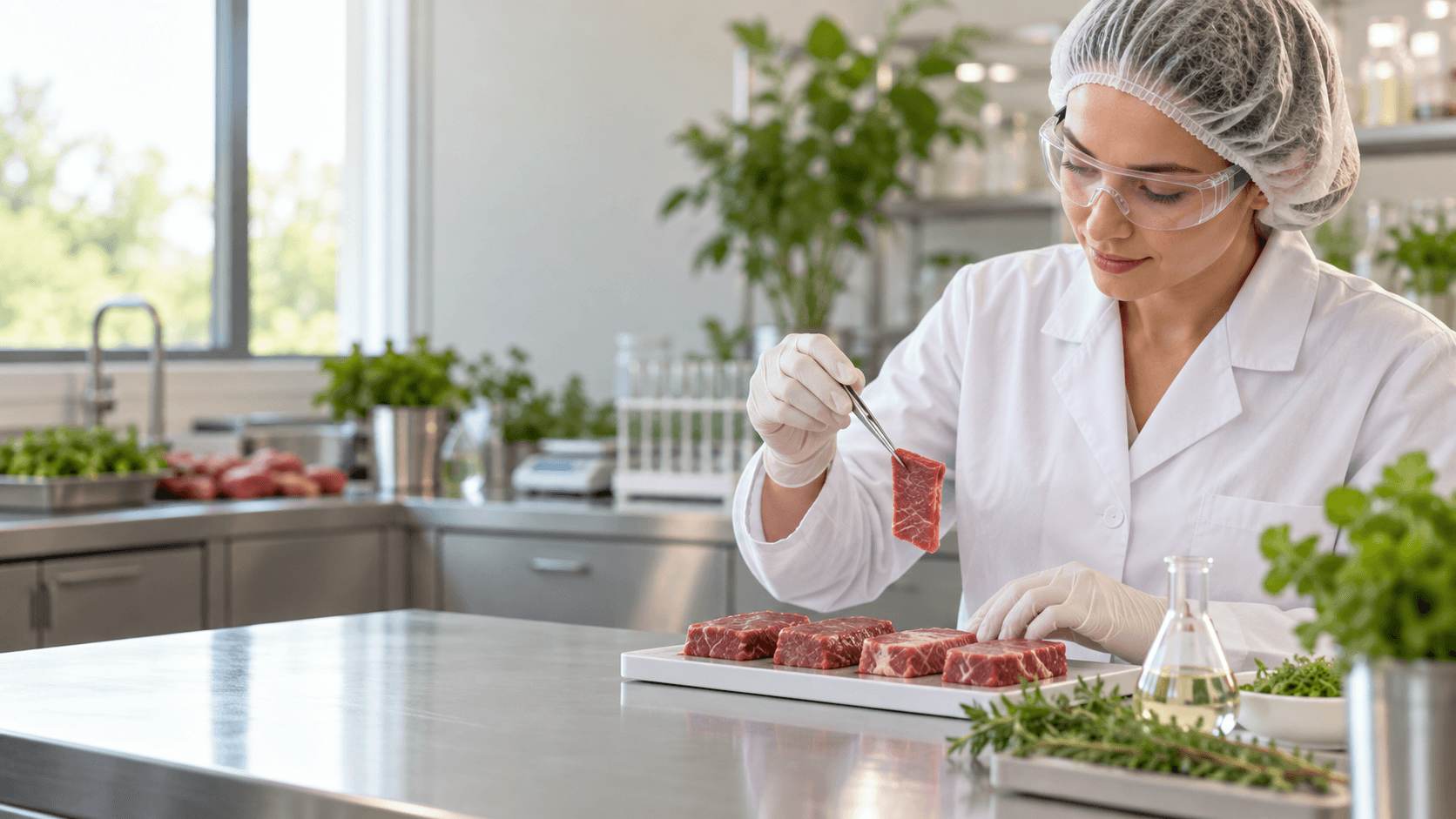


Complete application guide
How papain is used across food, feed, personal care and industrial processing
Papain is a protease from papaya latex. In simple terms, it cuts large proteins into smaller pieces. That one reaction creates many possible uses, but it does not mean the same product, activity or dosage works everywhere. ProEnzyme produces and supplies papain in refined, stabilized, food-grade and feed-grade powder and liquid formats. The following guide explains ten application areas, the result each industry may study and the controls needed before commercial use.
1. Meat tenderiser
Papain is widely studied as a plant-based meat tenderiser because it can act on muscle and connective-tissue proteins. Processors may add it through a dry seasoning, marinade, brine, injection or tumbling process. Powder is convenient for premixes, while liquid can support direct metering and fast distribution.
Control is essential. Species, cut, thickness, pH, temperature and contact time change the final texture. Too much activity or uneven delivery can produce a very soft surface while the centre remains tough. A good trial measures texture after the final cooking step and compares several activity levels with an untreated control.
2. General food processing
Food manufacturers use proteases where controlled protein modification may improve texture, solubility, filtration or recovery of useful material. Papain can be screened with animal proteins, plant proteins and protein-rich side streams. Because it has broad activity, the process should have a clear stop point rather than simply allowing the reaction to continue.
Food Grade Papain must be qualified for the exact process and destination market. Review the specification, activity method, allergen information and processing-aid or labelling rules. Quality checks should include sensory properties, yield, microbiological safety and shelf life, not only the immediate laboratory result.
3. Beer clarification and chill-haze control
Chill haze can appear when beer is cooled and haze-active proteins interact with polyphenols. Brewing research has examined papain as a way to modify some of those protein fractions. A liquid grade can be convenient when the brewery needs a measured addition at a controlled process stage.
Clarity cannot be judged alone. Protein treatment may also influence foam, filtration or flavour, and published work shows that activity and chill-proofing do not have a simple one-to-one relationship. Brewery trials should record point of addition and residence time, then compare cold turbidity, foam stability, flavour and packaged shelf life.
4. Improved digestibility research
Breaking a protein into smaller peptides may change how it behaves in a digestion test, food ingredient or feed. Papain is therefore used in hydrolysis and digestibility research. The first step is to measure what happened to the protein: degree of hydrolysis, soluble nitrogen, peptide pattern, viscosity or another suitable endpoint.
A processing result is not automatically a health claim. Human or animal digestibility depends on the complete product, population or species and study design. Any statement such as “improves digestion” needs finished-product evidence and regulatory review. ProEnzyme supplies activity-defined material for controlled development; it does not replace nutrition, veterinary or clinical validation.
5. Anti-inflammatory research
Papain and papaya-derived materials appear in laboratory, animal and review literature connected with inflammatory pathways. That makes anti-inflammatory research a possible R&D discussion, but not a general product promise. Evidence from cells or animals cannot be presented as proof that a commercial papain ingredient treats disease in people.
Qualified researchers should define the papain grade, activity, purity, controls and test system before work begins. Any medicine, supplement or therapeutic route needs appropriate regulatory and clinical expertise. Website copy and supplier documents should use precise research language and clearly separate early evidence from approved claims.
6. Exfoliation and skin-rejuvenation formulations
Proteolytic enzymes can act on protein material at the skin surface, so papain is evaluated in enzymatic exfoliation products such as masks, cleansers and professional formulations. Published cosmetic research describes potential exfoliation benefits while also stressing the importance of pH, temperature, stabilization and irritation risk.
A cosmetic formulator must show that useful activity remains through shelf life and that the finished product is safe under real consumer use. Preservation, package compatibility, exposure time, rinse-off instructions, allergy risk and compliant wording all matter. “Skin rejuvenation” should describe supported appearance outcomes, not an unproven medical effect.
7. Wound-care research
Papain has a history in research on enzymatic removal of damaged tissue, but wound care is a high-risk medical application. The US FDA ordered unapproved topical papain drug products off the market after reports of serious adverse reactions, including hypersensitivity. The agency also stated that the effectiveness of those unapproved products was not supported by sound studies.
ProEnzyme does not describe papain as an approved wound-healing treatment. Discussions must be limited to qualified research or lawful regulated development. Teams need medical and regulatory oversight, a defined jurisdiction, suitable purity and quality controls, a safety strategy and product-specific evidence before any therapeutic claim or patient use.
8. Toothpaste whitening agent
Papain is studied in whitening toothpaste because protease activity may help break down protein material linked with surface stains. Published evidence includes in-vitro dentifrice studies and reviews. These are useful for formulation planning, but the raw enzyme alone cannot prove that a toothpaste whitens teeth.
The complete toothpaste determines performance and safety. Formulators should measure enzyme activity after storage and test stain removal with suitable controls. Abrasives, surfactants, flavour systems and brushing method can affect the result. Enamel and dentine safety, surface roughness, irritation, microbiology and local oral-care claim rules all require review.
9. Animal feed
Feed Grade Papain can be evaluated as a protease in protein ingredients and complete-feed research. Studies of exogenous proteases and selected papain diets suggest possible benefits under specific conditions, but the outcome depends on species, age, diet, inclusion method and the manufacturing process.
Heat during pelleting, moisture and storage can reduce enzyme activity. A responsible programme checks activity before and after processing and uses a properly controlled animal study for the target species. Commercial use and performance wording must meet the applicable feed-additive, registration and labelling rules in the destination market.
10. Protein hydrolysis
Protein hydrolysis is the common technical link between many papain applications. Papain can be used with animal, plant and side-stream proteins to create smaller peptides, change solubility or reduce viscosity. The required result might be a functional ingredient, a feed material, a fermentation input or preparation for further separation.
Successful development starts with the endpoint. Run a time course across selected activity, pH and temperature conditions. Track degree of hydrolysis, soluble protein, viscosity, yield, flavour and peptide distribution. Plan the stop or inactivation step and downstream clarification, concentration or drying before scale-up. More hydrolysis can increase bitterness or reduce recovery, so the best process is the one that meets the product target—not the one that runs longest.
Talk to ProEnzyme about a trial
Send the application, substrate, pH, temperature, contact time, batch size, required activity, monthly volume and destination country. ProEnzyme can then discuss a suitable powder or liquid starting point and the documents available for qualification. Contact [email protected] or call +91 93730 76765.